

Have you ever asked your child if they’ve come across any pornography?
It’s a tough question, we know. But it might also be one of the most important ones you’ll ever ask.
Today’s porn isn’t just found in sketchy corners of the internet — it’s everywhere, hiding inside threads, social media feeds, even AI-generated content. It’s reaching our kids sooner than we’d ever expect.
If we want to protect them, we’ve got to start really understanding how porn gets to kids. Once we know that, we can take steps to stop it from impoverishing their hearts, altering their identity, or leading them toward exploitation.
Let’s explore what’s really happening, and what a faith-driven community can do about it.
Porn Finds Our Children: How Exposure Is Happening Earlier
It’s a conversation no one wants to have — and yet, it’s one of the most important ones we’ll ever start. Because whether we’re ready or not, pornography is finding our children. And in most cases, they weren’t even looking for it.
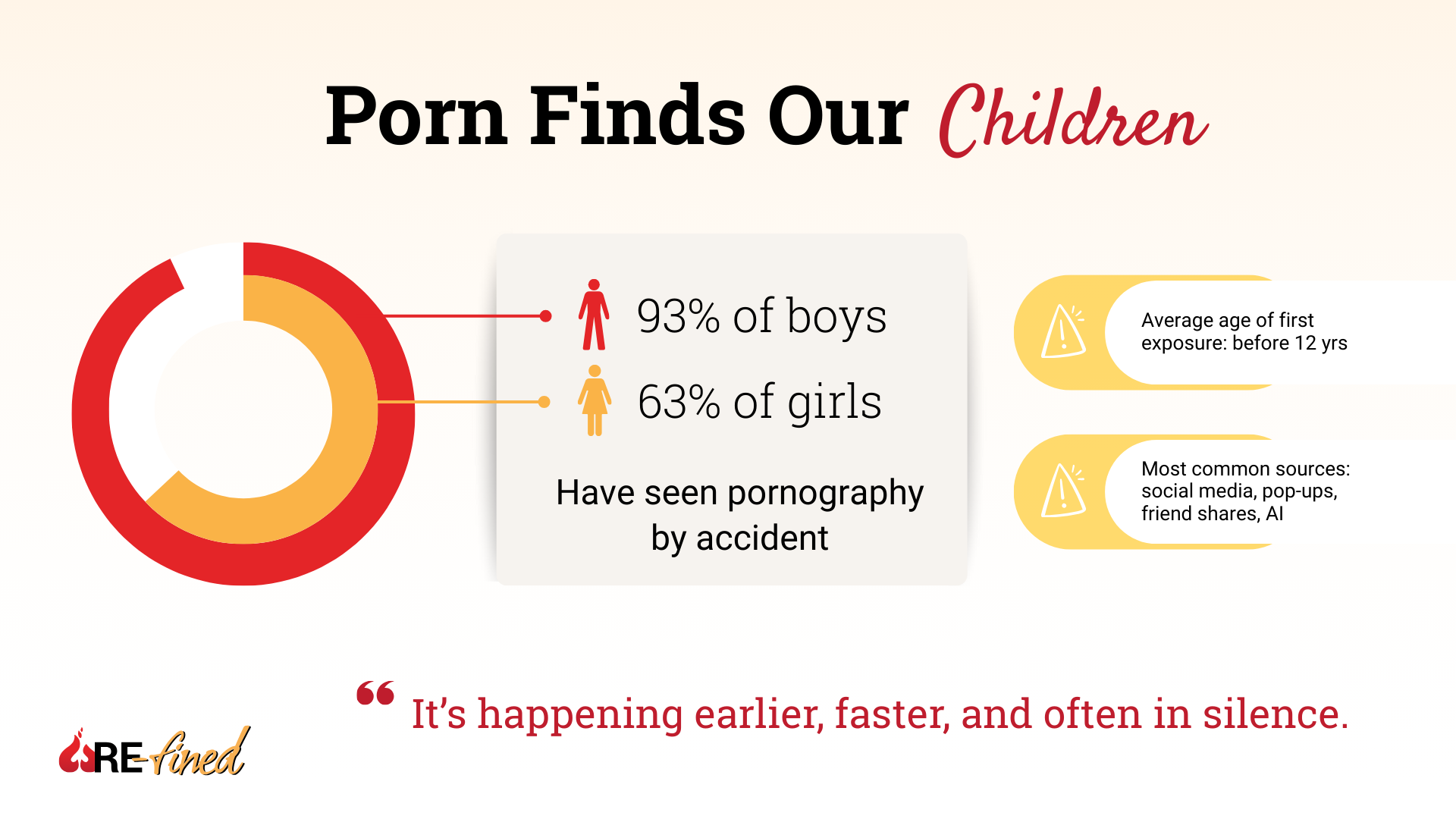
Early porn exposure is happening much sooner than you think. According to recent data, pornography is widely consumed by children today, with 93% of boys and 63% of girls reporting accidental porn exposure.
And that’s not the worst part:
The average age of early porn exposure among children is before 12 years old, meaning kids may have accidentally seen porn at much earlier ages.
What Early Exposure Does to a Child’s Brain
When a child sees pornography, it can seem like a one-time moment, but it affects far more than we realize.
Here’s what happens under the surface:
- Dopamine Flooding: Porn consumption causes a dopamine surge (the feel-good chemicals) in the brain. It feels exciting and new, and the brain starts craving more.
- Desensitization: Over time, the brain gets used to it. What once felt intense now feels normal, and kids may start searching for more graphic or risky content to get the same emotional response.
- Distorted Expectations of Love, Connection, and Worth: Porn can shape how young viewers understand relationships, boundaries, and power. Studies show that consistent exposure is linked to increased sexual aggression — including a higher risk of committing or experiencing abuse. It teaches a version of intimacy rooted in dominance, not dignity.
For children still learning what love and connection look like, pornography doesn’t just confuse — it can quietly shape beliefs that lead to harm.
When Shame Opens the Door to Grooming
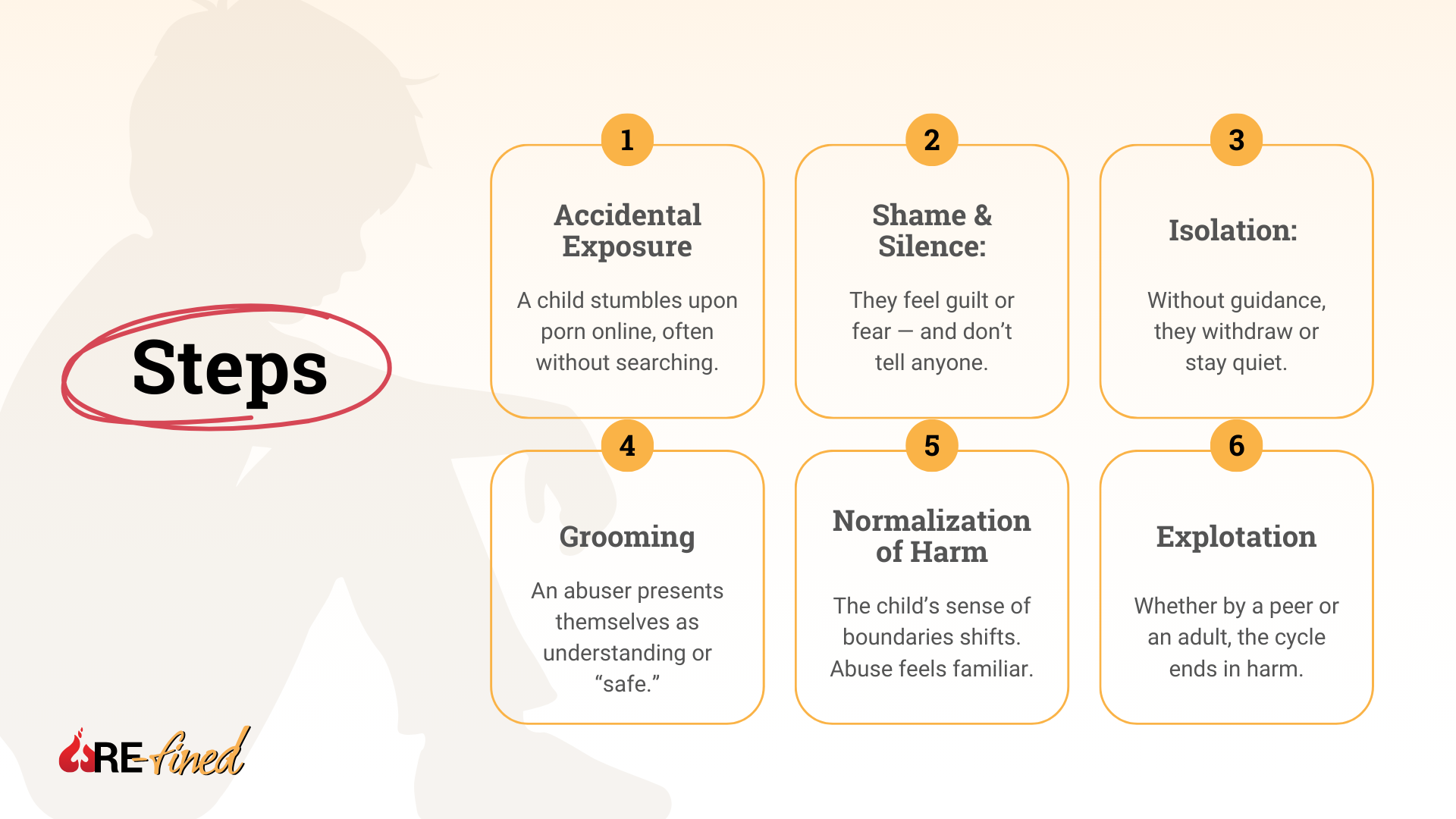
For many kids, the emotions that follow are heavy: shame, confusion, guilt. They don’t want to talk about it. They’re not sure how. So they stay silent.
And in that silence, predators often step in.
Groomers (whether online or in person) may present themselves as understanding or safe. They make kids feel seen, normalize what they’ve been exposed to, and slowly shift boundaries.
And that’s how exploitation begins.
Where Healing Begins and How We Equip Safe Adults
If you’re caring for or working with children, you don’t have to be an expert, but you do need to be aware.
At Re-Fined, we equip communities to respond with a trauma-informed lens. That means helping children who’ve been exposed to pornography or grooming feel seen, believed, and supported—not shamed or silenced.
We also walk with adults who have experienced sexual exploitation, many of whom were first harmed in childhood. One of our key programs is Faithful Friends, a restorative space that offers supportive, trust-based relationships. It’s not about fixing someone’s story, but walking alongside them as they reclaim their dignity and worth.
Because while we can’t undo what happened, we can build something new, together.
When Porn Fuels Exploitation in Teen Relationships
We often picture exploitation as something distant: a threat from outside our communities. But sometimes, it’s much closer than we realize.
It can show up between teens. Quietly. Wrapped in peer pressure, masked as romance, and often hidden in plain sight.
It might start as flirtation. Then comes the message: “If you loved me, you’d send something.” What might sound like normal teen behavior is often anything but.
Exploitation doesn’t always come from strangers — and it’s always harmful, no matter how normalized it becomes.
Here’s what it can look like in teen relationships:
- Sextortion — Threatening to share private photos unless more are sent
- Manipulation disguised as love — “If you really cared, you’d go further”
- Recording without consent — Capturing videos or photos during intimate moments
- Sharing content with others — Forwarding nudes or messages to gain attention or status
These aren’t harmless teen mistakes. They are often the early patterns of pornography and exploitation — fueled by silence, shame, and distorted ideas of intimacy.
AI and the New Age of Exploitation
It’s no longer just porn sites and videos anymore. As we speak, AI is slowly becoming a platform where porn is propagated and children are exploited.
Deepfakes: Real Faces, Fake Videos, Real Damage
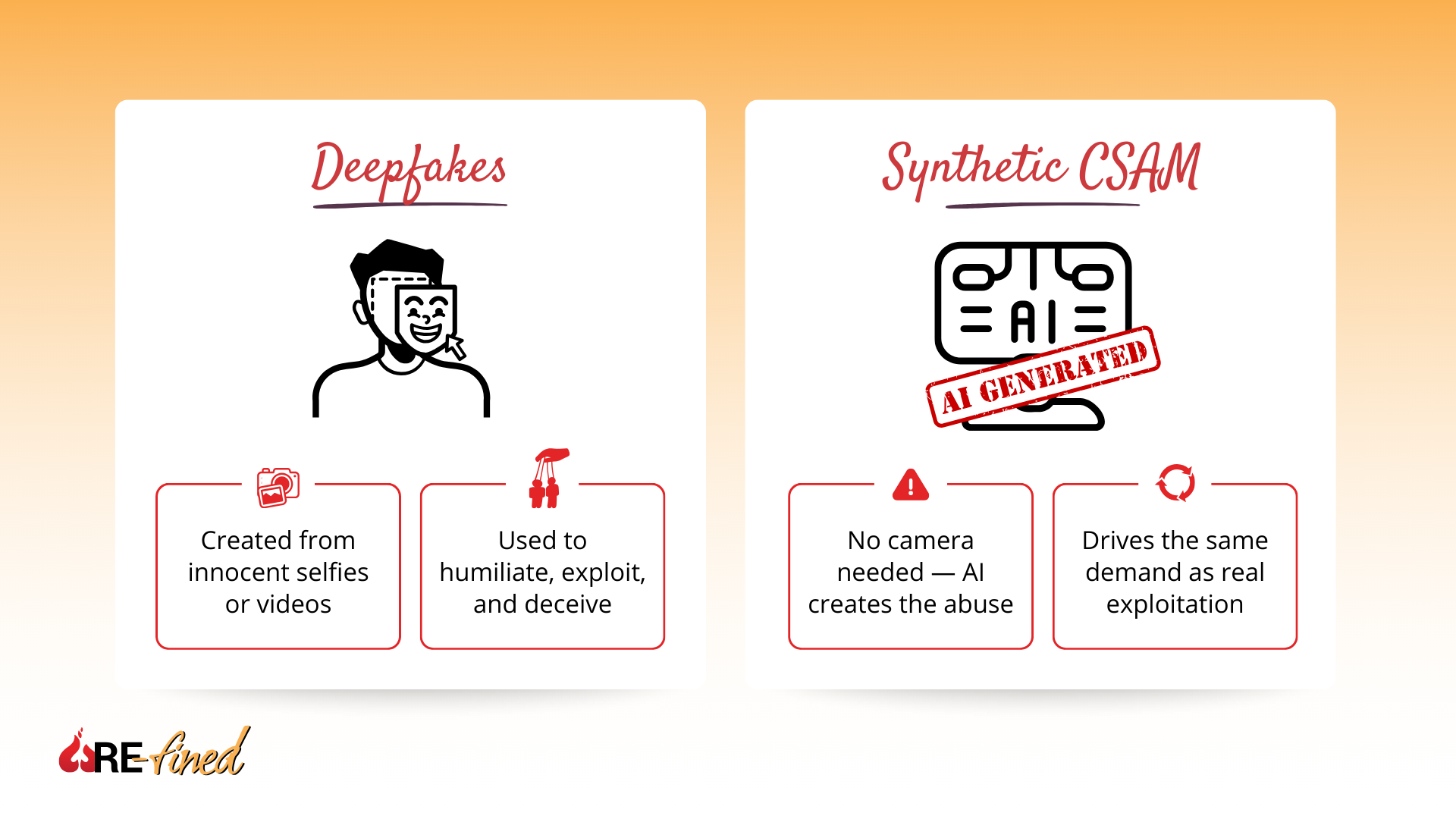
With just a handful of social media photos, AI can create hyper-realistic deepfake pornography — videos that look real, even if they aren’t. And once these deepfakes are made, they can spread fast. Many victims don’t even know the videos exist until someone else finds them.
Synthetic CSAM: Abuse Without a Camera
AI can now also generate fake child sexual abuse material (also called synthetic CSAM) — fake images that don’t use real footage, but still look disturbingly real.
While these images are synthetic, the harm they cause is real.
Like any addiction, the appetite for explicit material often grows over time. As viewers become desensitized, some begin seeking out actual abuse, even paying to exploit real children. Synthetic CSAM fuels that demand, keeping the systems of abuse running and keeping children enslaved, violated, and unseen.
Why It Matters and What’s Being Done
Right now, laws are still trying to keep up with the speed of AI. Many platforms struggle to detect or remove this type of content.
But advocacy groups like Fight the New Drug are stepping in. They’re tracking AI’s role in modern pornography, raising awareness, and equipping communities to respond with truth, compassion, and action.
Caring for Kids Starts with Safe Adults: What Every Organization Should Know
If you’re part of a church, nonprofit, school, or youth-serving program, you have a unique opportunity — and responsibility — to help protect the children in your care.
The reality is heartbreaking: every nine minutes, a child will experience sexual abuse. And in many of those cases, the abuse doesn’t come from a stranger — it comes from someone the child knows and trusts.
We often picture abusers as easily identifiable, but that’s rarely the case. Most are calculated. They work their way into trusted spaces, build credibility, and quietly groom not just children, but the adults around them. They blend in. They manipulate. And they rely on gaps in policy, supervision, and awareness to do harm.
This is where prevention matters. And while no system is perfect, there are strong, practical steps you can take to make it extremely difficult for abuse to happen under your watch.
Here’s where to start:
- Run thorough background and reference checks on every staff member and volunteer.
- Set clear, written policies around gifts, one-on-one time, transportation, and private communication.
- Train your team to recognize red flags, grooming patterns, and boundary violations — especially from adults or older teens.
- Establish layered accountability. Make sure multiple adults are always present, and avoid situations where someone is isolated with a child.
- Build a culture of safety over secrecy. Protecting children should always matter more than preserving an organization’s reputation.
And most importantly: if a child is harmed in your care, it is never the child’s fault. It’s not the parent’s fault. It’s not the organization’s fault. The blame lies solely with the abuser.
But with the right tools and intentional safeguards, we can create spaces where abuse is much harder to carry out, and far more likely to be noticed and stopped.
If your church or organization is ready to take the next step, we offer live, practical training designed specifically for youth-serving environments. These trainings equip your team to spot, stop, and prevent abuse before it starts.
Request training and take one step toward creating a safer environment for every child.
If you believe in this kind of prevention work, consider supporting it. Your financial partnership helps us continue offering these trauma-informed trainings to the communities that need them most.
It’s Not Too Late to Have the Conversation
Talking with a child or teen about pornography or sexual abuse can feel overwhelming. But it’s never too late to start, and you don’t need to be an expert to make a difference.
You’re already doing something powerful just by showing up, asking questions, and being a safe person they can trust.
When a young person shares something hard, how we respond matters more than what we say. Stay calm. Listen without interrupting. Don’t try to justify what happened, and resist the urge to get defensive. Instead, ask open-ended questions and remind them they’re not alone.
Research tells us that less than 1% of the time, kids lie about being sexually abused. So when a child opens up — believe them.
At Re-Fined, we walk with individuals who have experienced exploitation, many of whom were harmed in childhood and didn’t feel safe enough to speak up. That’s why prevention isn’t just about rules or policies. It’s about showing up with compassion, trust, and the willingness to have hard conversations.
Your voice matters. Your presence matters. And your care today could help protect someone’s future.
FAQs
How does early exposure to pornography affect children?
Early exposure can shape a child’s brain in powerful ways. It releases a surge of dopamine, which can quickly become addictive. Over time, it can change how kids think about love, relationships, and their own identity, making them more vulnerable to grooming and exploitation.
Is AI-generated porn really harmful if no one “real” is involved?
Yes — even if it’s digitally created, the harm is very real. Deepfakes often use real people’s faces without consent, and synthetic CSAM (child sexual abuse material) fuels the same harmful demand as traditional pornography.
These kinds of images may not involve a physical camera, but they still exploit, humiliate, and distort reality. They also reinforce destructive patterns in the brain, which can lead to addiction, desensitization, and serious mental health struggles for those consuming it.
AI-generated content might seem like a gray area, but its impact is anything but neutral.
What can churches and youth programs do to help prevent abuse?
Start by creating a culture of safety. Screen your staff and volunteers, establish clear boundaries for adult-child interactions, and provide training to help your team recognize grooming. Protecting kids goes beyond policies. It’s about putting them into practice with care and consistency.
