
There’s something satisfying about making a purchase — that feeling of checking off the list or finding a good deal. But behind every product we buy is a story we don’t always see.
Most of the things we use every day were made by people we’ll never meet — sometimes by children, or by women working under pressure or in unsafe conditions.
The truth is, we rarely pause to consider what’s behind a price tag or packaged item. But when we start to understand what someone’s life might look like behind the products we consume, we begin to see the deeper cost.
This isn’t about guilt. It’s about awareness and recognizing that fair trade and consumerism aren’t just buzzwords. They’re part of a bigger conversation about human dignity, global justice, and how our choices can either fuel exploitation or help prevent it.
The Hidden Cost of Convenience
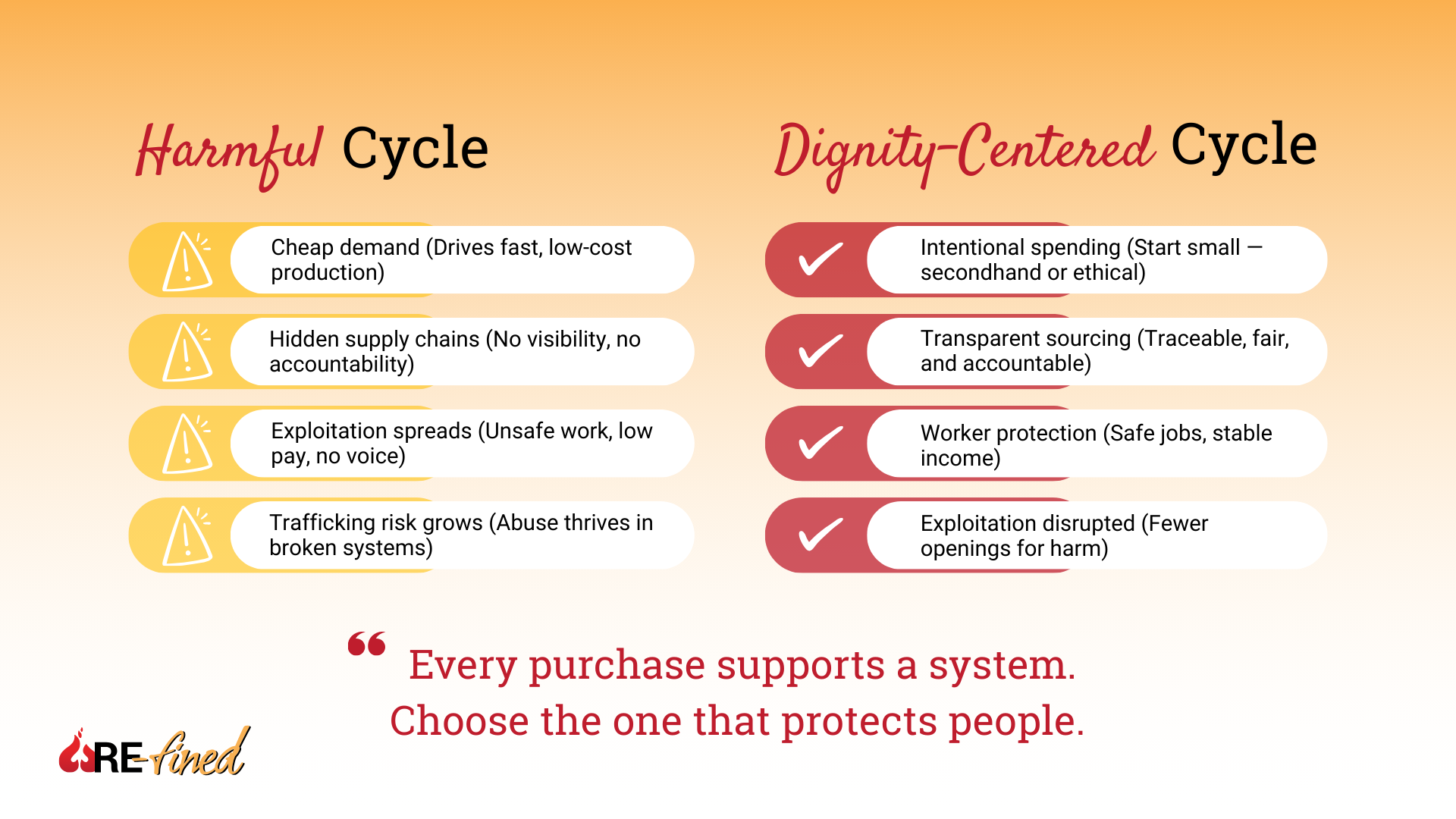
It’s easy to grab what we need off the shelf without a second thought, but many of the goods in our carts are part of a much bigger story. Behind the low prices and quick production are global supply chains that often rely on exploitative labor. And because these systems are hidden, the harm stays out of sight.
Child Labor Is Still Happening (Everywhere)
According to the International Labour Organization, more than 160 million children are involved in child labor worldwide. Some spend their days working in agriculture. Others stitch clothing, carry bricks, or mine for the minerals inside our phones.
These aren’t distant issues. They’re built into everyday products many of us use without even realizing.
Forced Labor and Exploitation Don’t Stop With Children
Adults are also caught in forced labor. Many work under threats of violence, blackmail, or deportation. The U.S. Department of Homeland Security estimates that millions of Americans are forced to work, especially in construction, domestic labor, and the fishing industry.
These realities may not be visible at checkout, but they’re deeply connected to the way we consume. That’s why understanding fair trade and consumerism matters. How we shop can either help stop exploitation or quietly sustain it.
When Convenience Costs Us More than We Think
Most people don’t set out to buy products made through harm. But when the true cost of something is hidden behind slick marketing or a low price tag, it’s easy to miss what’s really happening.
That’s the trouble with today’s global systems — the same ones that keep prices low often keep exploitation invisible. And unless we’re looking for it, we may never know what we’re supporting.
Why This Matters to Us
At Re-Fined, we’re committed to ending sexual exploitation — and we’ve seen how labor exploitation often goes hand-in-hand.
Many women face barriers that make steady work hard to secure: limited access to education or training, records tied to past exploitation, and few safe, supportive networks. Those barriers make people more vulnerable to workplace harm.
What this can look like in real life:
- Someone is promised “training,” then used as free or very low-paid labor
- Hired for childcare or service work, pays for transportation, and goes home unpaid
- Hired for one role and quietly pressured into something entirely different
Some industries, like illicit massage businesses, reveal how labor and sexual exploitation can overlap. The same systems of coercion, debt, withheld wages, and isolation can push people from one form of abuse to another.
This is why fair trade and consumer awareness matter. They shine light on hidden systems, shift demand toward transparency and worker protection, and help our spending reflect dignity rather than exploitation. Prevention is layered — relational, spiritual, and economic — and we’re committed to equipping individuals, churches, and communities to make everyday choices that honor the people behind every product and paycheck.
What This Can Look Like in Real Life
An employer learns about someone’s past and begins to hold power over it — shifting schedules, threatening hours, or delaying pay. Boundaries blur, and the quiet pressure slides from “do me a favor” into coercion. Exploitation grows in that silence. With steady support and external accountability, people can regain safety, choice, and dignity at work.
What “Fair Trade” Actually Means
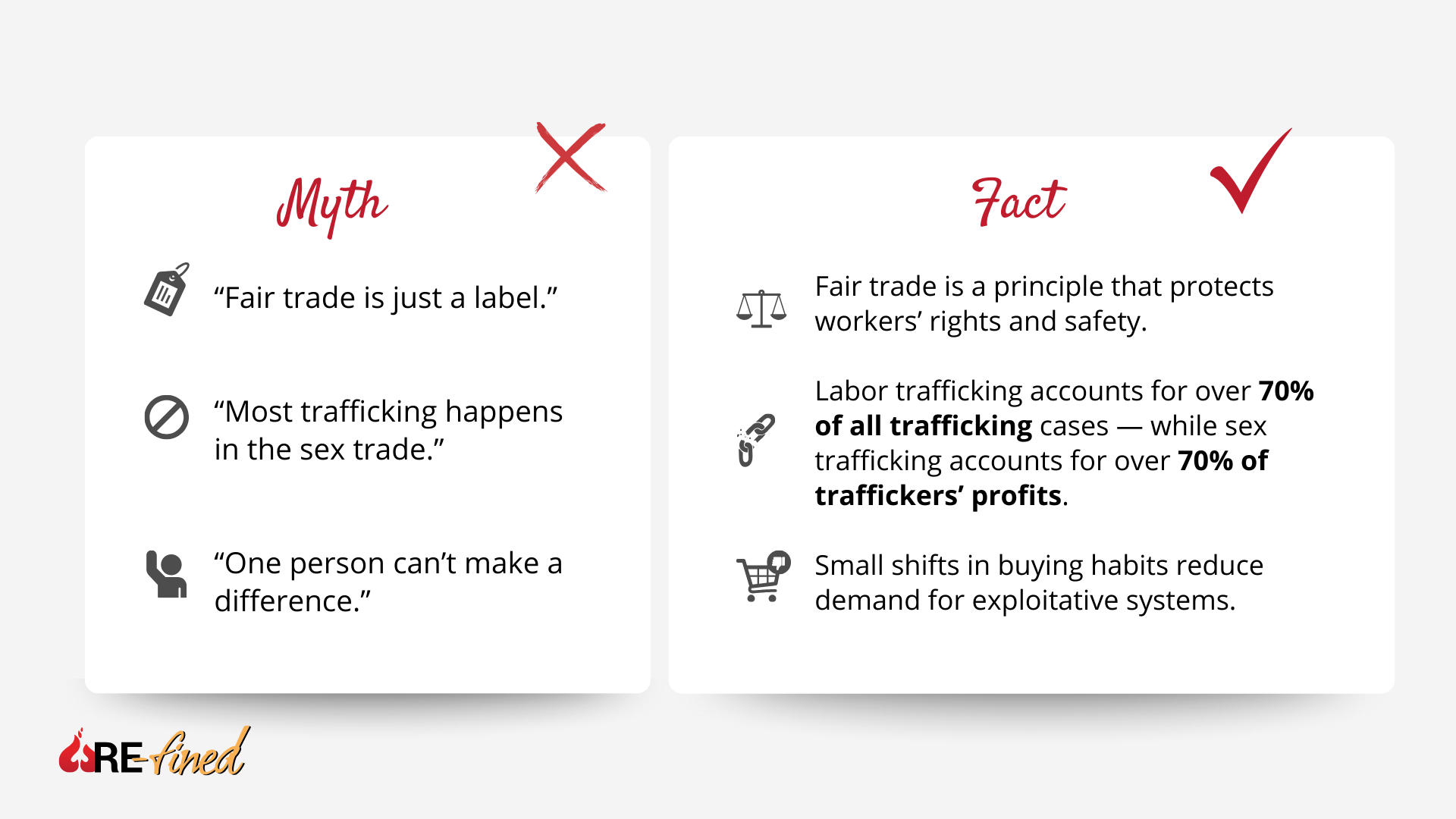
When it comes to fighting exploitation, one of the biggest tools we have is fair trade — a set of guiding principles that prioritize people over profit.
At its core, fair trade means this:
- Workers are paid fairly
- Child labor is not allowed
- Jobs are safe, and no one is forced or coerced
Brands that meet these standards can earn a fair trade certification — that little logo you sometimes see on coffee, chocolate, or clothing tags. It signals a commitment to ethical sourcing and labor practices.
But Here’s the Complicated Part
Fair trade certifications can be helpful, but they’re not foolproof. Many brands also work with other groups like the Fair Labor Association or B Corp. These partnerships sound great on the surface, but they don’t always include strong third-party oversight.
And without real accountability, some companies end up checking boxes instead of protecting people.
A Better Model: Letting Workers Lead
That’s where something called Worker-Driven Social Responsibility (WDSR) comes in. Instead of relying on corporations to police themselves, WDSR puts the power in the hands of workers. They’re the ones with the insight, and now, with tools to:
- Report harm safely
- Enforce protections
- Help shape the terms of their labor
It’s a more grounded, people-centered approach — one that helps make fair trade and consumerism more than just a label. Because the more transparency we have, the more informed and dignity-driven our choices can be.
From Labor Trafficking to Sexual Exploitation
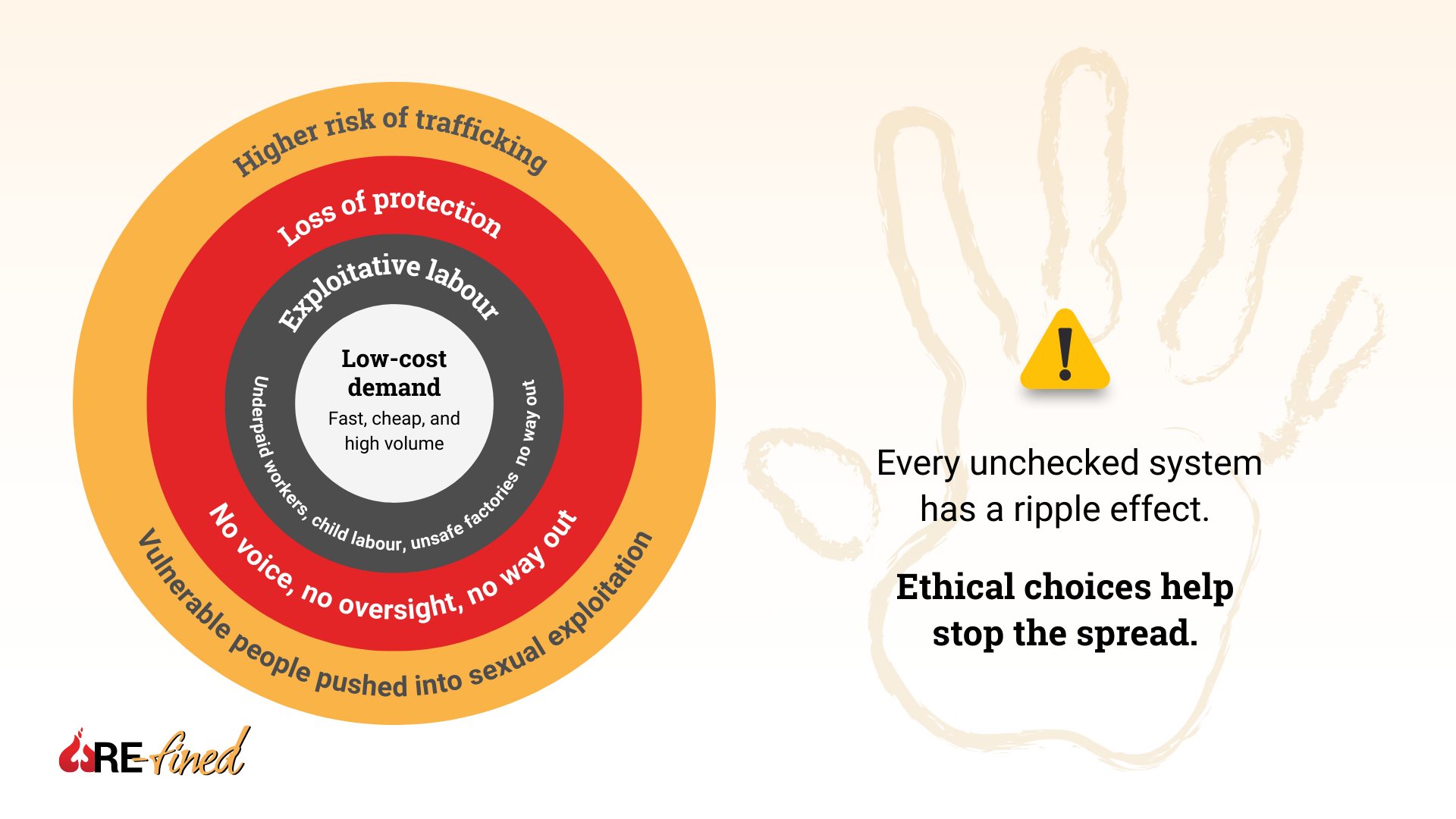
At first glance, fair trade and consumerism might feel disconnected from things like labor trafficking or sexual exploitation. But in reality, they’re tightly woven together.
The same systems that keep workers trapped in unsafe factories or fields are often the ones that allow sexual coercion and abuse to thrive. It’s all part of a larger web of exploitation — where poverty, power imbalance, and lack of accountability fuel harm in different forms.
Sometimes, it starts with the promise of a job. But behind that promise is a trap:
- Wages are withheld
- Debts are used as control
- Threats replace freedom
We’ve seen people forced into domestic work who are then sold for sex. And others who are exploited in the sex trade and later pushed into garment or farm labor when demand shifts.
You see it in:
- A nail salon technician whose tips are taken, “training fees” deducted, and schedule controlled through threats
- A hotel housekeeper in Colorado pressured to work unpaid overtime and threatened with lost shifts if she speaks up
- A seasonal farmworker in California whose crew leader withholds wages and controls transportation and housing
- A Bangladeshi woman sewing for hours in a locked factory
- Children harvesting cocoa in West Africa to help their families survive
- Migrant workers hoping for better … only to be deceived or trafficked
This kind of exploitation doesn’t live in just one place. It lives in the systems we often don’t see — and sometimes in the products we use every day.
We believe prevention starts long before someone ends up trafficked. It starts with the choices we make, the systems we support, and the questions we ask.
Small Changes, Big Impact
Stopping exploitation can feel overwhelming. But the truth is, small shifts in how we shop really can disrupt cycles of harm. Here are a few simple steps to start making a difference:
Step 1: Buy Secondhand When You Can
Thrifted or pre-owned items skip harmful supply chains altogether and help reduce waste. It’s one of the most effective (and affordable) ways to shop more ethically.
Step 2: Choose One Product to Switch
Don’t overhaul everything. Just start with one item you use often — like chocolate, coffee, or your favorite tee — and look for a fair trade or ethically sourced option.
Step 3: Ask the Right Questions
Before buying, get curious. Ask:
“Who made this?”
“Were they paid fairly?”
Questions like these create accountability and push companies to do better.
Step 4: Buy Less, Choose Well
Fast fashion might be cheap, but it often comes with hidden costs. Choosing fewer, higher-quality items helps reduce demand on workers and factories.
Step 5: Support Ethical and Local Businesses
Seek out makers and shops that value transparency and treat people with care. Every dollar spent is a vote for the kind of economy you believe in.
Step 6: Be Generous in Other Ways
You don’t always have to buy. Share with a friend, lend something to a neighbor, or offer what you already have. Community-minded generosity honors people and resources without needing anything in return.
Step 7: Use Tools That Help You See the Risk
Resources like Verité, Know the Chain, Fair Food Program, and Coalition of Immokalee Workers reveal how certain industries exploit labor — and who’s working to stop it.
Let Your Values Guide Your Cart
Micah 6:8 reminds us to act justly, love mercy, and walk humbly. And those words don’t just guide our relationships — they can shape our spending, too.
Every dollar we spend is a vote for the kind of world we want. Fair trade and consumerism aren’t about being perfect — they’re about being aware, intentional, and committed to dignity.
So start small. Tell a friend. Share this message. And join us in building a world where exploitation has fewer places to hide.
Want to take the next step?
Join us in our mission to stop exploitation wherever it takes place and before it takes hold of another life.
Get involved or share your blessings.
Or tag us on Facebook or LinkedIn to help more people see our message.
FAQs
How are fair trade and consumerism connected to exploitation?
Most of us don’t realize it, but a lot of everyday products — from chocolate to clothing — are tied to supply chains that involve forced labor or trafficking. When we buy without thinking about where things come from, we can unknowingly support those harmful systems. Fair trade and consumerism are connected because what we buy either challenges or continues that cycle.
Is fair trade just a marketing buzzword?
It’s more than a label. True fair trade is about real protections, like fair wages, safe working conditions, and no child or forced labor. It’s not a perfect system, but it brings much-needed transparency into industries that often hide what’s really happening behind the scenes.
What’s one simple buying change I can make right now?
Start with secondhand. It’s the easiest and most impactful step. Buying used helps you step outside of harmful supply chains, reduces waste, and makes ethical choices more affordable. It’s a win all around.
