
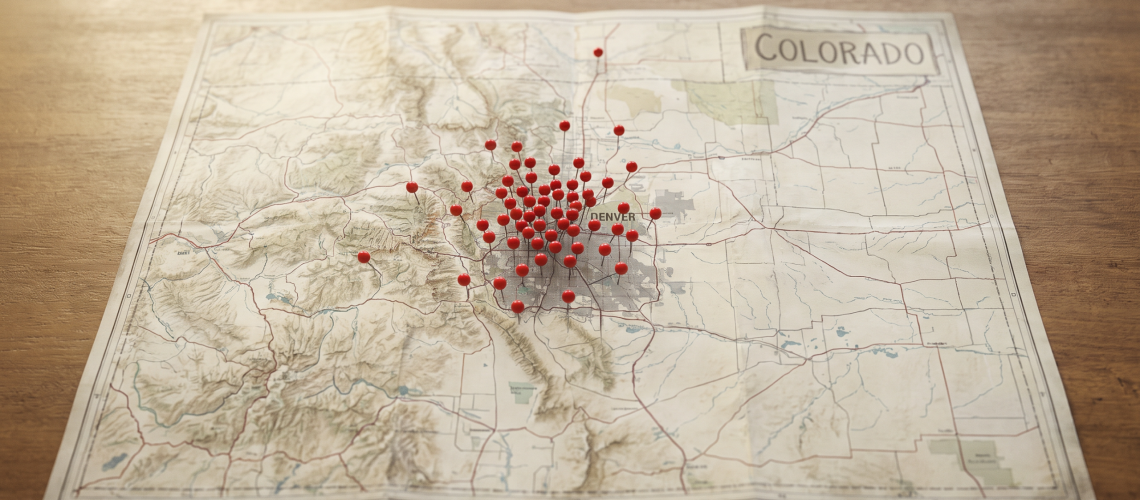
Numbers alone don’t capture the trauma behind human trafficking, but they do reveal something important: this is not a fading problem in the Denver metro area. It’s an escalating one. Understanding the data helps donors, volunteers, and community members see exactly where their support matters most.
Colorado’s Trafficking Numbers Are at Record Levels
According to FBI data, Colorado recorded 88 human trafficking offenses in 2024; the second-highest total on record, trailing only the 107 offenses reported in 2023. Preliminary Colorado Bureau of Investigation data suggests 2025 may match or exceed that record, with 110 trafficking crimes already tracked despite an ongoing 30-day data-entry lag that likely undercounts the true total.
Colorado’s sex trafficking cases specifically ranked 10th in the nation and 10th per capita in 2023, the year the state recorded a record 84 sex trafficking cases; the metric most relevant to the commercial sexual exploitation that organizations like Re-fined focus on.
Denver County’s Role in the Crisis
Between 2008 and 2025, Denver County accounted for 18% of Colorado’s total trafficking victims, ranking third statewide behind Adams County (27%) and El Paso County (19%). In 2025 alone, Denver and El Paso counties each represented about 16% of the statewide trafficking count, while Adams County led with 34%. Because these counties sit in the same metro corridor, Denver-based support organizations regularly serve survivors from across all three.
Locally, the scale of the problem is stark: the commercial sex industry is estimated to generate over $62 million annually in Denver alone, a figure that illustrates just how profitable, and entrenched, this activity has become in the region.
Minors Are Disproportionately Affected
Perhaps the most alarming trend in the data is age. Since 2008, 60% of Colorado’s identified trafficking victims have been minors, and that share has climbed further in recent years, averaging 51 minor victims annually between 2021 and 2025, up 63% from the 2016-2020 average of 31 per year. In 2025, 48 trafficking victims statewide were under the age of 18.
What the Data Means for Denver’s Response
Rising case counts don’t necessarily mean trafficking is becoming more common everywhere at once — increased identification, training, and hotline awareness also play a role. But the concentration of cases in Adams, El Paso, and Denver counties suggests the Denver metro area will remain ground zero for anti-trafficking work in Colorado for the foreseeable future.
This is precisely why organizations like Re-fined focus their resources on Adams County and the broader Denver metro area: it is where the need is most concentrated and where established relationships with local law enforcement and service providers already exist.
References
- Common Sense Institute Colorado, “Human Trafficking in Colorado: 2025 Update,” February 2026, commonsenseinstituteus.org.
- The Center Square, “Human trafficking reaches high levels in Colorado,” February 11, 2026, thecentersquare.com.
- Colorado Division of Criminal Justice, “2025 Colorado Human Trafficking Council Annual Report,” dcj.colorado.gov.
- Re-fined, “Donate,” re-fined.org.
- Denver Gazette, “PERSPECTIVE: Colorado’s human trafficking is getting worse,” February 14, 2026, denvergazette.com.
- Colorado Public Radio, “New shelter near South Denver aims to help women who survived sex trafficking,” December 11, 2024, cpr.org.
