

Sexual exploitation can happen online or in person. It might start out with trust, friendship, or even love, and then shift into pressure, threats, or control.
If any part of your story involves being tricked, forced, or pushed into sexual activity, especially for someone else’s benefit, that’s exploitation. It is absolutely not your fault, no matter how it started or how long it’s been happening.
Your safety comes first, and help is available, even if you’re not ready (or sure) about reporting.
We’re here to walk you through what exploitation can look like, how to spot red flags, what steps you can take, and how others can support you with care.
You’re not alone in this.
Immediate Safety First
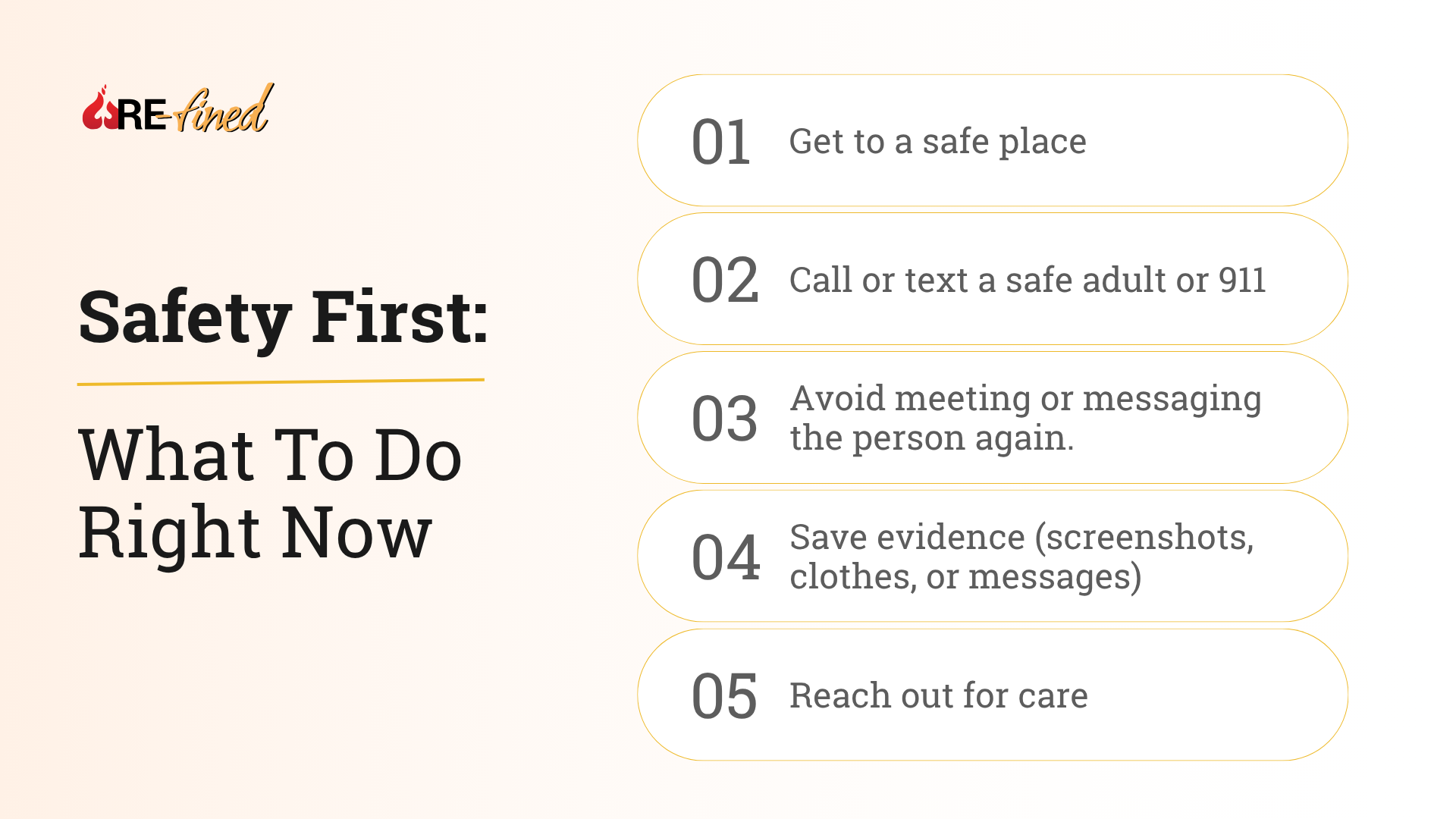
If you’re a child or teen reading this, your safety takes priority. You should immediately go to a public place (the first step to preventing sexual exploitation). It’s absolutely fine if you’re not ready to talk, but once you are, don’t hesitate to contact a trusted adult or 911. You can meet the adult or ask the trusted person to come to you.
Stuck on what to say?
Try: “Hey, I need help and a private place to talk. Can I come to you?” or “Something happened and I don’t feel safe. Can you be with me right now?”
If you’re the parent or guardian of a child who has been sexually exploited or coerced, it’s recommended that you find a calm, private space to listen actively to your child. Believe them. False reports are rare — about 1%. You’ll also want to thank the child for trusting you, reassure them that what happened wasn’t their fault, and resist the urge to confront the abuser.
Tell a Safe Adult and Choose Where To Talk
Though it may sound scary, telling someone safe is the first step to take.
A safe adult might be a parent, caregiver, pastor, youth leader, teacher, or counselor — someone who will listen without judgment and follow safety policies.
If you’re reaching out to someone for help, or someone is opening up to you, it’s really important to talk in a private, safe space. Pick somewhere away from shared homes, phones, or devices, especially if there’s any chance the person who caused harm could be watching or listening in.
If you’re a parent reading this, you’re likely your child’s safe person. Keep any questions you have simple and gentle. Don’t push for details, just let them share at their own pace. Avoid “why” or “how could you” questions — they can feel blaming and shut a child down. When you write things down, use their exact words to help protect their story and build trust.
Reporting and Pressing Charges
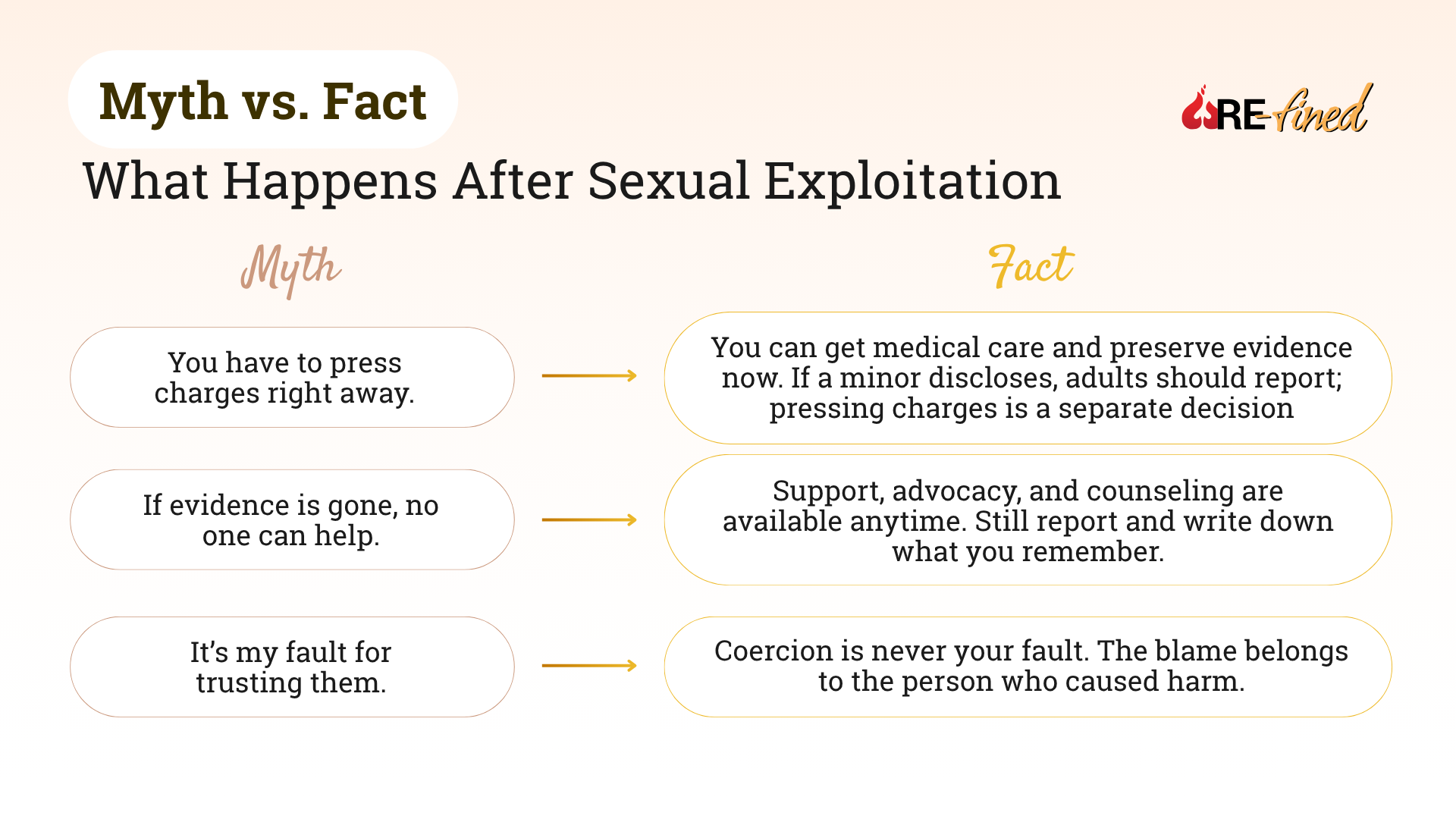
After you’ve told someone about your ordeal, there are a number of things you can do, but reporting is often the first course of action and kickstarts the criminal process.
That said, never feel pressured to immediately press charges. There are other steps you can take.
What To Do Besides Pressing Charges
Seek medical attention. Medical care and evidence collection (a forensic or SANE exam) is possible with or without filing a police report, and many hospitals allow anonymous evidence storage for a time so you can decide later.
Right now, you can:
- Get medical care: Ask for a trauma-informed exam, testing for infections, pregnancy prevention, and referrals. In Colorado, Ralston House is a top option for children who have been abused; they provide trauma-informed medical exams and work closely with law enforcement and advocates. Note that a case must be active for Ralston House to see a child.
- Preserve evidence: Save clothing in a clean paper bag. Keep screenshots, texts, and usernames. Write down dates and what happened in simple language.
- Talk to an advocate: Hospitals or crisis centers can connect you to someone who explains options clearly and confidentially.
“I’m Not Ready To Report or Press Charges. What Do I Do?”
There’s no need to rush if you’re not ready to press charges, but you will need to ask how long evidence can be stored anonymously and keep a copy of any report number. If a minor is seen at a hospital for suspected abuse, medical staff are mandated reporters and must file a report with authorities.
It’s also a good idea to have a safety plan in place.
When You’re Ready
Tell law enforcement or the hospital that you’d like to report something . Bring notes and screenshots, and request an advocate to be present.
Remember: a mandated report by a provider is not the same as “pressing charges.” A report starts notification and safety steps; choosing to press charges is a separate decision the family can discuss with law enforcement and an advocate.
When you’re asked, you can say something along the lines of:
“Something sexual happened that I didn’t want. I’d like to see a doctor and know my options.”
If you’re a parent reading this, you could say:
“My child has experienced sexual exploitation. We need trauma-informed care and to understand next steps.”
Medical Care and Evidence Basics
There are same-day exams in most hospitals, which you can confidentially arrange with hospital staff even if you’ve already showered or changed clothes. Hospitals trained for forensic exams will guide you through each step with care.
If you’re a parent, you can help by bringing a change of clothes, preserving what was worn in a paper bag, and asking for a victim advocate to stay with your child.
It’s also important to write down timelines, usernames, or details while they’re still fresh. These will be critical when you press sexual exploitation and coercion charges later.
Digital Safety and Cleanup
If someone’s been contacting you in ways that feel wrong or uncomfortable, here are some steps you can take to protect yourself online:
- Save the evidence. Take screenshots of messages, profiles, payment receipts, or anything else that shows what happened.
- Stop contact right away. Block their number and any accounts.
- Turn off location sharing on apps and devices.
You’re not in trouble. You deserve to be safe, and there are adults who want to help.
As a parent, here are a few ways to support:
- Help change all passwords.
- Turn on two-factor authentication.
- If needed, consider a basic phone or a clean device just for essentials.
- Keep copies of any evidence.
Has an image been shared? You should report it immediately to the NCEMC’s CyberTip Line.
School, Church, and Team Support
If you’re a parent reading this, request changes in places your child spends time (like two screened adults in view and traceable communication). Changes can also mean different schedules, adult supervision, or no-contact plans.
Here’s what you can say when you meet with supervisors and managers:
“My child needs a safety plan that removes contact, sets supervision, and keeps communication transparent. Who can coordinate this?”
At-Home Care: How Parents Can Support
After exploitation, calm and consistency help the body remember what peace feels like.
So, to reintroduce normalcy, have simple routines like meals together, rest, and time spent outside. There’s no need to be perfect — all you need to do is be consistent.
When your child opens up, stay close and listen. You don’t need the full story right away. Let them share at their own pace.
What matters most is that they see your calm. Your attentive and calming presence is the beginning of healing. Be patient and have grace with yourself and your child. Healing is a lifelong journey with ups and downs.
If you can, find a trauma-informed counselor who works with both teens and parents. A counselor can help you learn how to respond in ways that calm rather than trigger.
After traumatic experiences like sexploitation or coercion, there are bound to be changes in behavior. So, watch out for changes in sleep, appetite, school focus, and how your child reacts to touch or sound. These are normal signs of a nervous system trying to recover.
And when words feel hard, a few simple ones are enough:
- “We’ll take this one step at a time.”
- “You get to choose what you share and when.”
- “I believe you. You’re safe here.”
Healing Is a Family Journey
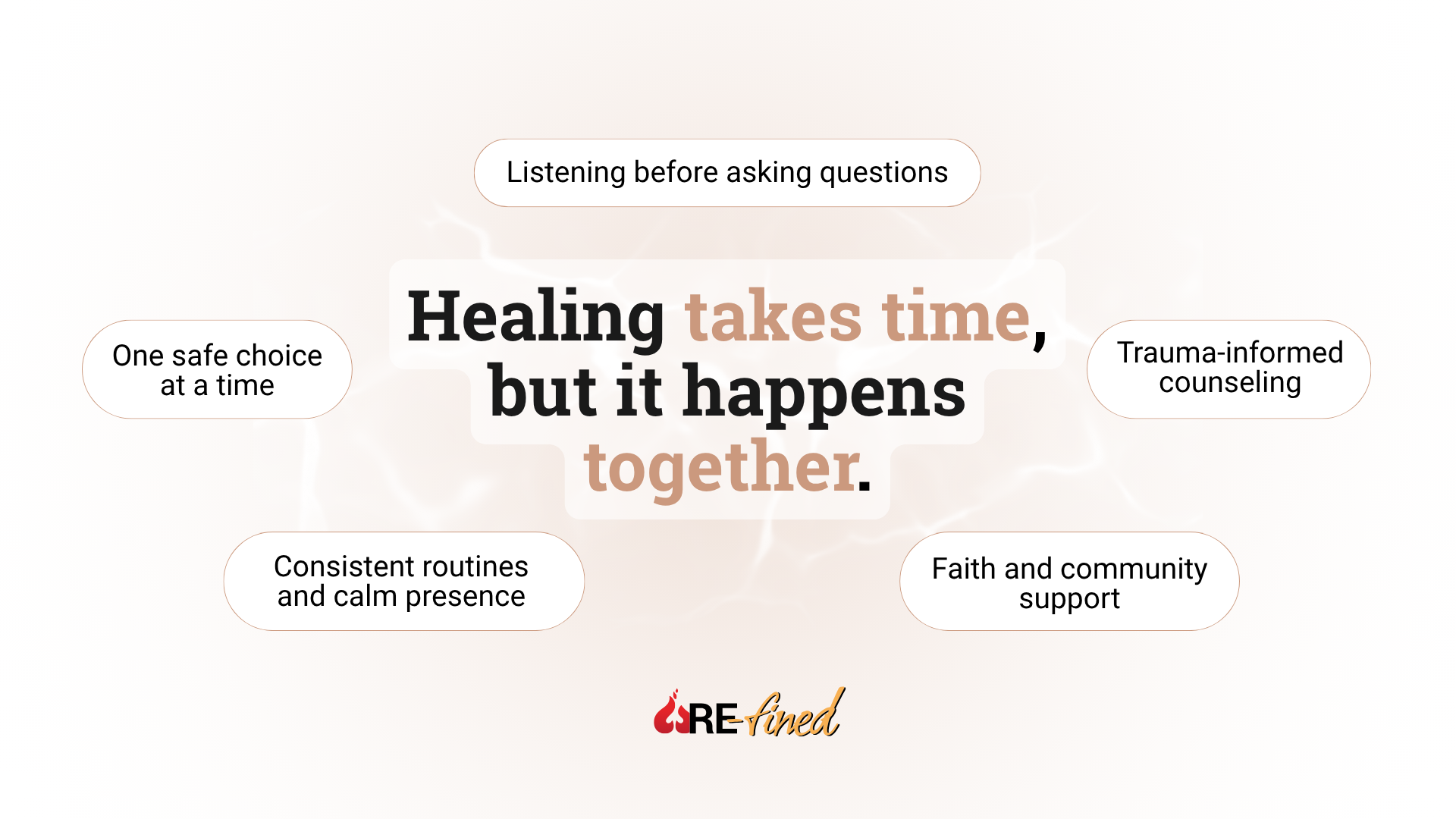
Healing doesn’t follow a schedule. Some days will bring laughter, others will bring tears.
For a child or teen, real healing begins when they know the harm wasn’t their fault. This truth may take time to sink in, so give them space to rest, cry, play, and create. Movement, music, prayer, and time outdoors can also help the body let go of fear.
As a parent, you need to heal, too. After all, you carry your own shock and grief, even as you try to stay strong. Support from a counselor or trusted friend can help you stay grounded when the days feel heavy.
Local and Trusted Resources
When you’re ready to reach out, start local. Hospitals, advocacy centers, and counselors can guide you through care, reporting, and support:
- Ralston House: Child Advocacy Center offering exams and safe interviews.
- The Blue Bench: 24-hour hotline and advocacy for anyone affected by sexual assault.
- Cornerstone Counseling: Christian counseling for teens and families.
- Hope House: Support for teen mothers working toward stability.
- Where Grace Abounds: Faith-based recovery and mentorship for LGBTQ+individuals and families.
If you’re unsure where to start, you can say:
“We’re looking for counseling for a teen who experienced sexual exploitation. Do you have openings or a waitlist, and can you guide us on next steps?”
For children, there are numerous resources available for added support:
- Ages 3 to 10: God Made All of Me: teaches body safety and reinforces that safe adults don’t ask for secrets.
- Ages 11 to 17: Good Pictures Bad Pictures, plus tech-safety tools like Canopy, Bark, and Covenant Eyes.
- Ages 18 to 25: Fight the New Drug, Live Free, SheRecovery, and Hooked for education and accountability.
Our Role at Re-Fined
We walk alongside individuals, families, youth, and organizations providing trauma-informed support for those rebuilding life after exploitation and coercion. We’re also steadfast in empowering communities, providing training for churches, schools, and institutions.
And when needs go beyond our scope, we make warm referrals to trusted medical, legal, and counseling partners. We also offer Court Support, including accompaniment to hearings and help understanding the legal process (and much more). Our team partners with rehabilitation and recovery centers to connect people with safe, stabilizing care, and we collaborate with law enforcement when appropriate to support safety and reporting.
If you’ve made it this far and saw your story in the words we’ve shared, know that it’s not your fault. You’re not alone, and help is a call away.
If you’re a parent or community leader who wants to make a difference, host us in your home or community center to raise awareness or attend an upcoming Sexual Exploitation 101 session.
Together, we can build safer spaces and restore hope one person at a time.
FAQs
What should I do if I think my child has been sexually exploited?
Stay calm and listen. Avoid anger or blame and focus on safety.
You can call a local advocacy center or hospital for guidance on next steps.
Does my child have to report right away?
No. You can seek medical care and preserve evidence first, and many hospitals can store it anonymously while you decide. Some professionals must file a report when a minor discloses abuse, but your family can still take time to talk with an advocate or law enforcement about whether and when to press charges.
What if images or messages were shared online?
Don’t delete anything yet. Save screenshots, report the content to the platform, and ask for the report ID.
If you’re a child reading this, a trusted adult or advocate can help you contact the CyberTipline at 1-800-THE-LOST for removal assistance.
