

There’s a lot of talk about consent, but it means very little when someone says “yes” under duress. This situation is exactly what coercion looks like, and it happens when pressure, threats, or manipulation are used to override real choice.
Coercion is at the center of various forms of exploitation, be it financial, sexual, emotional, or physical. When someone offers permission under threat, this is not “consent.” Only when a person is free from fear, fraud, force, and control can we say someone has given their true permission.
If you or someone you know is currently being coerced, know that you’re supported in taking action.
- As a first step, you can contact the National Coalition Against Domestic Violence or the CCASA.
- You can also contact local law enforcement authorities or the National Human Trafficking Hotline at 1-888-373-7888. Know that help is available and you’re never alone.
Coercion Defined
It’s not always easy to determine what counts as coercion, especially when it can look similar to consent on the surface, but if there’s any pressure, threats, manipulation, or misuse of power involved to get someone to do something, know that coercion is at play.

Types of coercion include:
- Sexual: Being guilted, shamed, or threatened into physical acts.
- Financial: Being forced to hand over money or work under unfair conditions.
- Emotional: Silent treatment, gaslighting, or using affection as leverage.
- Physical: Confinement, blocking exits, or threats of harm.
- Tech-based: Stalking, sextortion, or monitoring messages and location.
If you’re still not sure whether you or someone you know is a victim of coercion, ask yourself whether there’s any threat of harm, financial deprivation, or defamation.
If you’ve answered “yes” to any of the above, then you have your answer.
What Coercion Looks Like in Real Life
Coercion seems like an abstract concept until you realize that it takes place in even the most ordinary and everyday settings. Here’s how it appears in daily environments and situations.
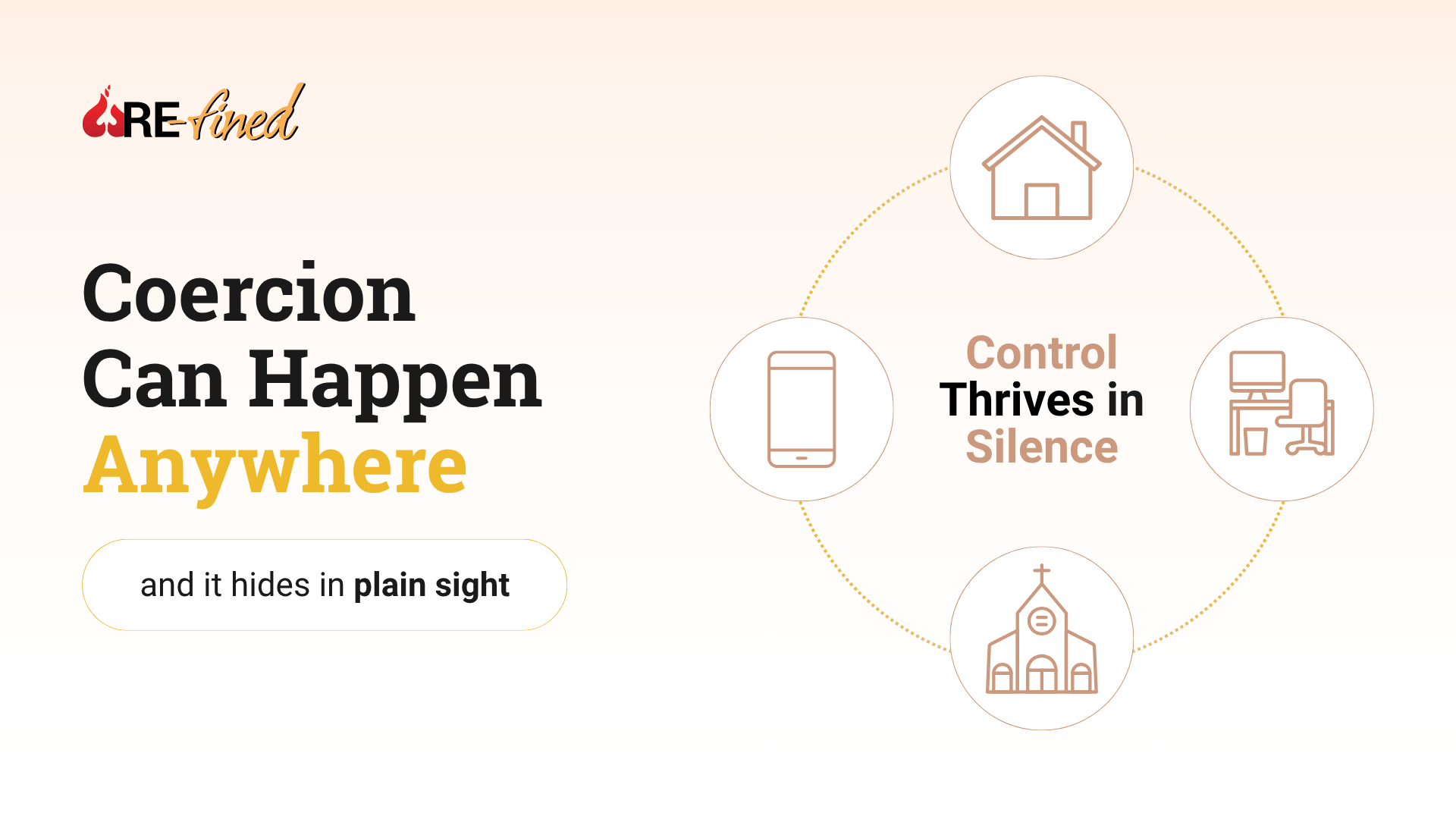
At Home or in Dating
Coercion can wear the mask of love. It can look seemingly innocent, but you may hear phrases like “If you loved me, you’d do this.”
In other cases, there may be promises of affection coupled with threats to withhold it. By design, this causes the person living under duress to fear the loss of connection, shelter, and all sense of security.
Words like “My no is non-negotiable, even if I care about this relationship,” may seem heavy, but they distinguish between love and control.
At Work, School, or on Teams
As with cases of domestic abuse, coercion tends to take place in dynamics where power is uneven, ranging from threats of termination to delaying pay until you “cooperate.”
In any case, be sure to document any and every incident. You’ll want to include details like:
- Time
- Date
- Person involved
- Subtle but manipulative requests (like being asked to stay late, meet alone, or keep secrets)
In Faith Spaces
Unfortunately, in some churches and religious communities, you may notice someone misquoting Scripture to demand “obedience,” spiritual pressure, or attempts to isolate someone from their community. If you or someone you know is experiencing this, reach out to another trusted leader in your church or faith space.
Online and Tech-Based Coercion
Coercion today affects technology and can appear as stalking, sextortion, or unauthorized account access. And when it does, children are often some of the first victims.
Do you suspect online coercion or sextortion? We suggest doing the following:
- Save all evidence
- Refuse to send images
- Change passwords from a safe device
- Reach out to bodies like the National Center for Missing and Exploited Children or The Blue Bench for help
- If you’re a parent, use tools like Protect Young Eyes or BARK to ensure safe tech access
Why “Just Leave” Isn’t Always So Simple
Just leaving sounds so simple from the outside; you may have even thought this yourself — a totally human reaction. Unfortunately, people actually living through a coercive relationship are often struggling with fear, money, children, or threats of retaliation.
Some stay to protect their children, whereas others fear losing housing, jobs, or community.
Instead of pushing someone to “just get out,” it’s often much safer and more supportive to focus on safety planning.
So, go ahead and ask how you can help the person feel safer, offering choices rather than pressure. You can also offer to:
- Help store copies of documents
- List safe contacts
- Find a place to call if danger rises
Spot the Pattern, Not Just the Moment
Everyone has their share of scuffles and disagreements, but when abuse becomes a regular occurrence, it’s time to consider it a pattern. Coercion is one form of abuse that often forms slowly through isolation, secrets, shifting rules, or punishment when someone sets a boundary.
Have you noticed this in your situation, or someone else’s? You should write down what happens during each incident, and keep these notes private. Don’t post in group chats or blast it to everyone. We recommend talking to a trusted safety lead or advocate who knows how to best handle the situation.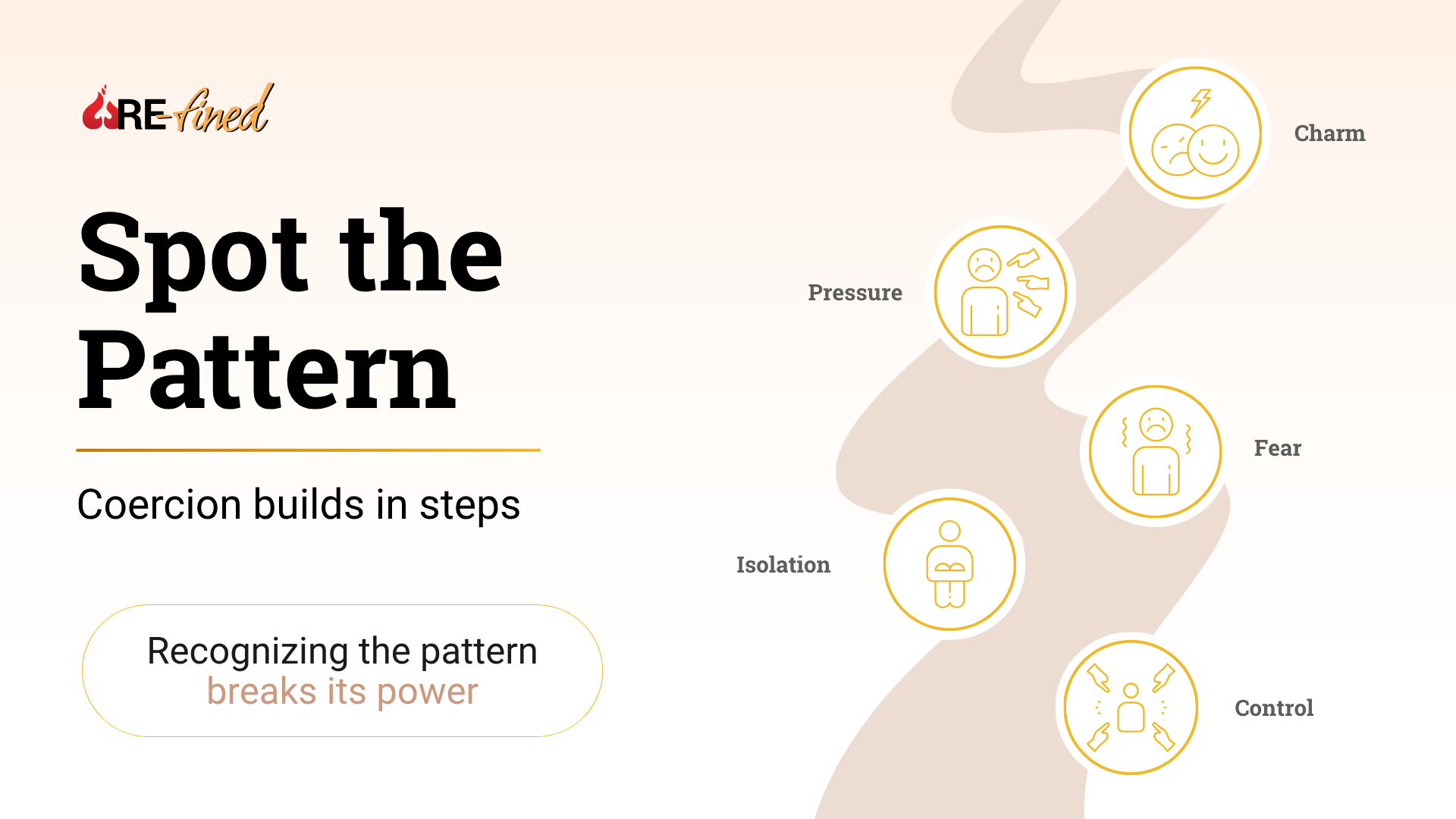
How To Respond Safely
When someone comes to you about living under coercion, do the following:
- Meet somewhere safe and private (preferably without devices, as these can be monitored)
- Listen actively and believe what you’re told
- Ask open questions about what the person is living through
As you offer up your assistance and support, keep it super clear: the person has no obligation to anyone. You should also remind the individual that options are always available and that you’re there to help navigate them.
A few things to never do, even with the best intentions:
- Confront the perpetrator of abuse
- Make promises you can’t keep
- Impose an ultimatum
Having a safety kit ready can make a big difference if things take a turn. As part of each kit, there should be code words for emergencies, copies of IDs, and a go-bag kept in a safe place that can be easily grabbed.
In the case of tech-based harm, start fresh with new emails and new devices.
And, of course, if in fear of immediate danger, never hesitate to call 911.
Coercion in Trafficking Control and Spotting Red Flags
People who recruit or traffic others don’t always look shady or dangerous. In fact, many use charm, fake promises, or emotional pressure to gain control in the beginning. Be sure to watch out for:
- Promises of work or love that turn into threats
- Withholding pay, ID, or freedom of movement
- Emotional, financial, or tech-based control
- Threats against family members
If you experience any of the above or if someone approaches you living through these, contact:
Re-Fined’s Role
We’re a nonprofit organization offering services and supportive relationships to anyone who’s ready to (or ready to help someone else) break free from coercion, exploitation, or trafficking. Our trauma-informed programs offer restorative relationships, practical support, and spiritual care that help rebuild dignity and trust.
When someone’s ready, we’re here to connect them to legal, medical, housing, gainful employment, and tech-safety partners. We’re also training providers for churches and community groups who want to recognize and respond well to coercion.
You also have the power to make a difference. Here are some ways you can help your church, school, workplace, or small group recognize coercion and respond with care
- Host a Mission Briefing in your home or workplace to raise awareness, or attend one of our regular Sexual Exploitation 101 (SE101) trainings.
- Request on-site training for practical, trauma-informed steps your team can use right away.
- You can also partner with us financially, making sure that no one ever walks alone.
FAQs
What does coercion mean in plain terms?
Coercion is when pressure, fear, or emotional manipulation takes away real choice. If someone feels they must comply to avoid harm, consequences, or loss, that is coercion, not consent.
How is coercion different from consent?
Consent is voluntary and informed; it can be given or withdrawn without fear. If fear, fraud, threats, or misuse of power are involved, the “yes” is not freely given and does not count as consent.
What’s the first step to take if I notice coercion?
Believe what you see and what you’re told, then ask what feels safest for the person right now. From there, help them connect with a trusted advocate, hotline, or local resource so they can review options without added pressure.
