

It’s that time of the year — Domestic Violence Awareness Month. And every year during this month, we come together to remember that abuse is everywhere, even in plain sight.
It’s a reminder that abuse doesn’t always look like bruises. It often shows up as control, fear, isolation, or money being used as leverage. Abuse can appear in the most minute and seemingly harmless forms, ranging from financial control to passive-aggressive intimidation.
And that’s not all.
There’s a close overlap between domestic violence and trafficking. Coercion, monitoring, bondage, and fear all play a role, and the person causing harm usually appears trustworthy and charming in public.
So, what do we do about it? We can show up for our brothers and sisters when they need us most. Here’s how.
Safety note: If someone is in immediate danger, call 911.
Step 1: Notice the Signs Without Jumping to Conclusions
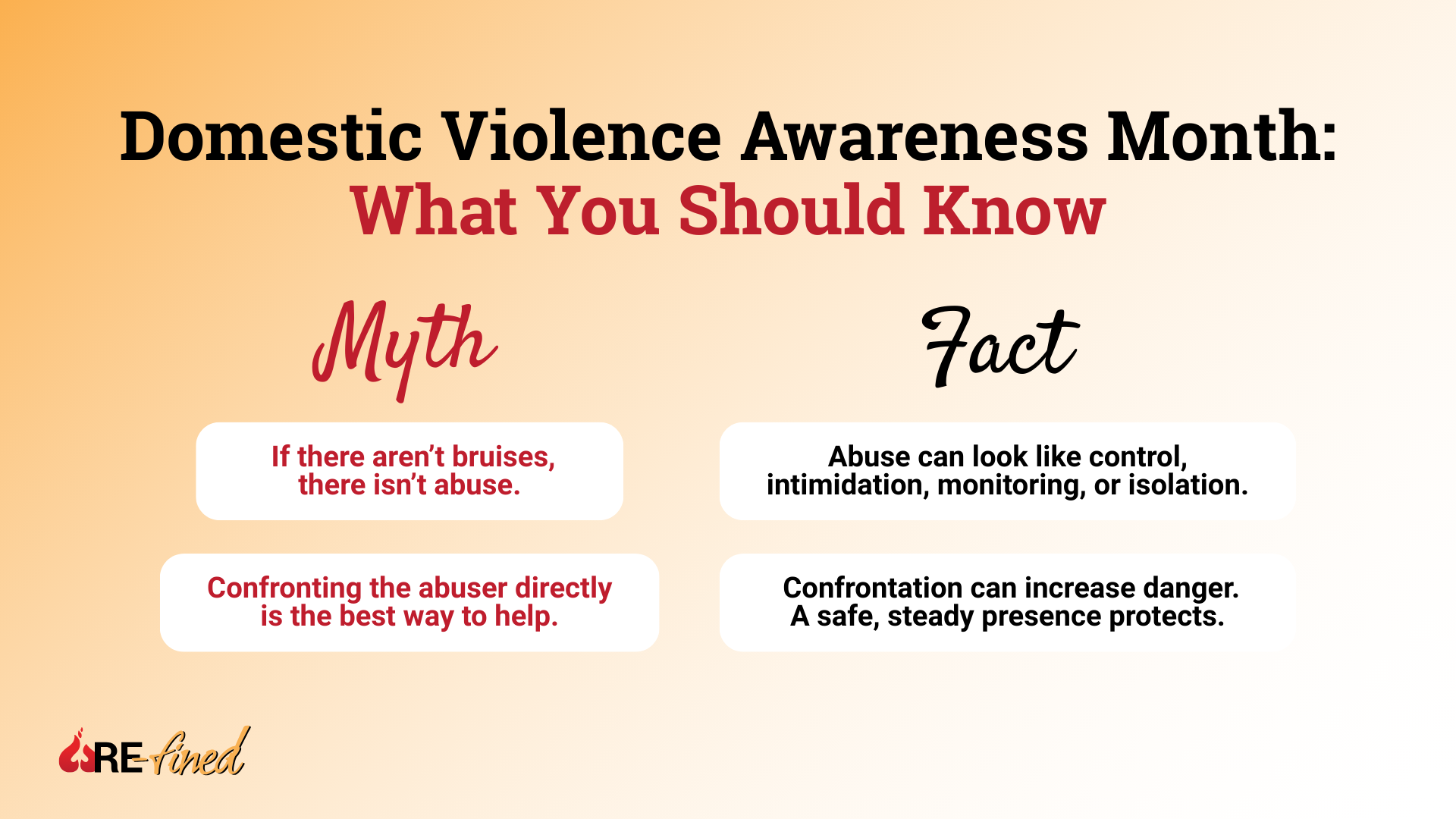
One of the first tasks of domestic violence awareness is noticing disrupted patterns. You don’t have to diagnose the situation. Just pay attention to patterns that feel “off.” Common signs include:
- Control and monitoring: Partner demands passwords, checks call logs, tracks location, limits car access.
- Isolation: Sudden distance from friends, faith community, or work events.
- Financial control: No access to bank cards, “allowances,” forced job loss.
- Emotional shifts: Hyper-vigilance, self-blame, minimization (“It’s not that bad.”).
- Visible injuries with vague explanations or frequent “accidents.”
Do you also see self-blame, hyper-vigilance, or minimizing language? Coincidentally, these signs are similar to those of exploitation.
What’s key is that you notice the signs without labelling the person. Noticing with care opens the door to trust.
Step 2: Set the Stage for Safe Conversation
Is the person ready to talk? When you do start a conversation, keep it gentle. While you’re at it, you’ll also want to ask open questions, reflect on what you hear, and resist the urge to fix.
Openers you can use
- “You’ve seemed stressed lately. I care about you. Is everything okay at home?”
- “I’ve noticed you’re not yourself. Would it help to talk somewhere private?”
- “No pressure to share more than you want. I’m here for you.”
What helps in the moment
- Ask open questions, then listen.
- Reflect what you hear: “That sounds scary,” or “It makes sense you’d feel that way.”
- Avoid advice, timelines, or ultimatums. The goal is safety and choice.
Things to keep in mind
- Avoid shared homes, shared devices, or known routines where a partner could overhear.
- Assume phones, tablets, and computers may be monitored. Offer to meet in person or use a safe device if needed.
- Your goal is to create trust and offer support — not to solve domestic abuse.
Step 3: Listen in a Trauma-Informed Way
What does it mean to listen to in a trauma-informed way?
If you’re doing this for the first time, focus on the person’s experience. Try to avoid probing or confrontational language.
Helpful phrases
- “Thank you for telling me.”
- “I believe you.”
- “This is not your fault.”
- “You can share as much or as little as you want.”
- “Would it help to look at options together?”
When someone discloses abuse, resist the urge to interrogate or “solve” (False reports are rare). Believing them reduces shame and opens a path to safety.
Step 4: Support Safety Basics Without Making Promises
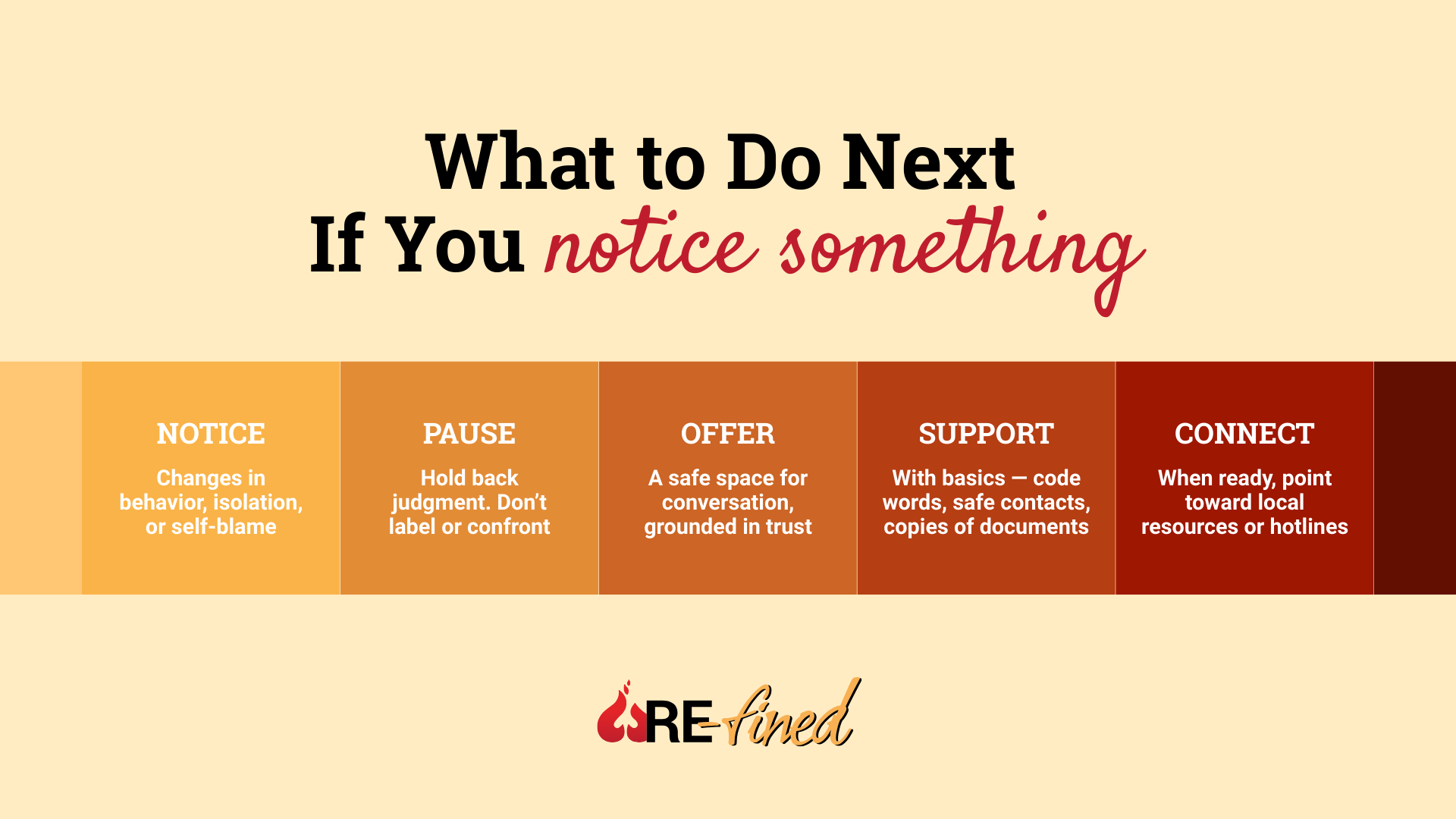
After hearing a person’s story, it’s easy to want to act immediately. But confrontation with the person causing harm can increase risk. Instead, offer small, practical steps the person controls
Practical steps you can take
Being supportive can take simple forms, including:
- Code words: Agree on a phrase that means “call now” or “come get me.”
- Safe contacts: List trusted people and a safe time to call them.
- Copies of documents: IDs, prescriptions, custody papers stored with someone trustworthy.
- A small go-bag: Essentials, meds, a change of clothes, spare keys. Keep it somewhere safe.
- Phone safety: Consider a secondary email or a basic phone in a safe place.
Step 5: Know Colorado-Specific Pathways to Help
When someone wants options (or risk increases), point to local help.
Don’t hesitate to engage with these groups in Colorado:
- The Colorado Coalition Against Domestic Violence (State coalition)
- SafeHouse Denver
- Rose Andom Center (Denver)
- TeVeo house (Short term housing) from Re-Fined’s partner, Open Door Ministries
- Chayah House (2-year stabilization home for women) from Re-Fined’s partner, Open Door Ministries
- Local police or emergency services for urgent danger
Note: If you’re outside Colorado, share your state coalition and local shelters.
Step 6: Practical Ways to Walk Alongside (Without Causing Harm)
“Showing up” often looks ordinary, and that’s really powerful.
Practical support
- Rides to appointments, court, or work.
- Childcare during key meetings.
- Sitting with them while they make calls or fill out forms.
- Help documenting incidents (only if safe) like dates, photos of damage, or saved texts stored with a trusted person.
- Help finding resources: look up local shelters, legal aid, protection order clinics, and advocacy hotlines; offer to call together on a safe device.
- Light financial help: a gas gift card, grocery card, transit pass, or prepaid phone minutes. Avoid shared bank accounts that a partner can see.
- Documentation: jot dates, save screenshots or photos of damage, and store copies with a trusted person or advocate.
What to avoid
- Confronting the partner.
- Pressuring the person to leave on your timeline.
- Sending sensitive info to monitored devices.
Some individuals living through domestic abuse won’t have the bandwidth to perform even the most basic tasks, so small acts like these can make a huge difference in someone else’s life.
Help Document Incidents Safely
There’s a chance that the person may need evidence to prove domestic abuse later. So, you can also assist the individual by supporting documentation efforts. For example, you can be someone the person can trust with photos, recorded messages, or texts.
Don’t Rush
While the desire to help is understandable, intervening without assistance from local authorities can be risky and may not fully address the complexities of the person’s situation.
Step 7: Make Your Public Spaces Safer
Are you managing a school, building, or any other public space? Here are some ways you can make your spaces safer:
- Discreet help signs in restrooms with hotlines and a safe email.
- Quiet spaces and a private phone line that won’t appear on shared plans. Or, a free, unmonitored phone people can use without paying.
- Simple code signals people can use with staff or leaders.
- Basic training for greeters, group leaders, and volunteers on how to respond and refer.
Step 8: Understand the Overlap (and the Differences) With Trafficking
Domestic violence and trafficking often share the same tactics: isolation, threats, device monitoring, and tight control of money. In trafficking, the defining feature is profit from forced sex or labor, and it is most often familial — carried out by a family member, romantic partner, or another trusted adult who should be protecting the person.
Domestic violence typically stays within the partner or family context without a third party profiting.
Why it matters: Whether it’s domestic violence or trafficking, the wound often looks the same — someone who was supposed to love and protect them became the source of harm. That betrayal creates deep confusion and attachment, which is why the road to healing can be long and complicated. Naming this overlap helps us show up with extra patience, steady presence, and care that honors how hard it is to untangle love, fear, and control.
If you are unsure how to name what’s happening, help the person connect with trained advocates who can clarify options and build a safe plan.
You Can Help
Abuse is always the abuser’s fault. Still, you can make a real difference by being a safe person — at home, at work, and in your community.
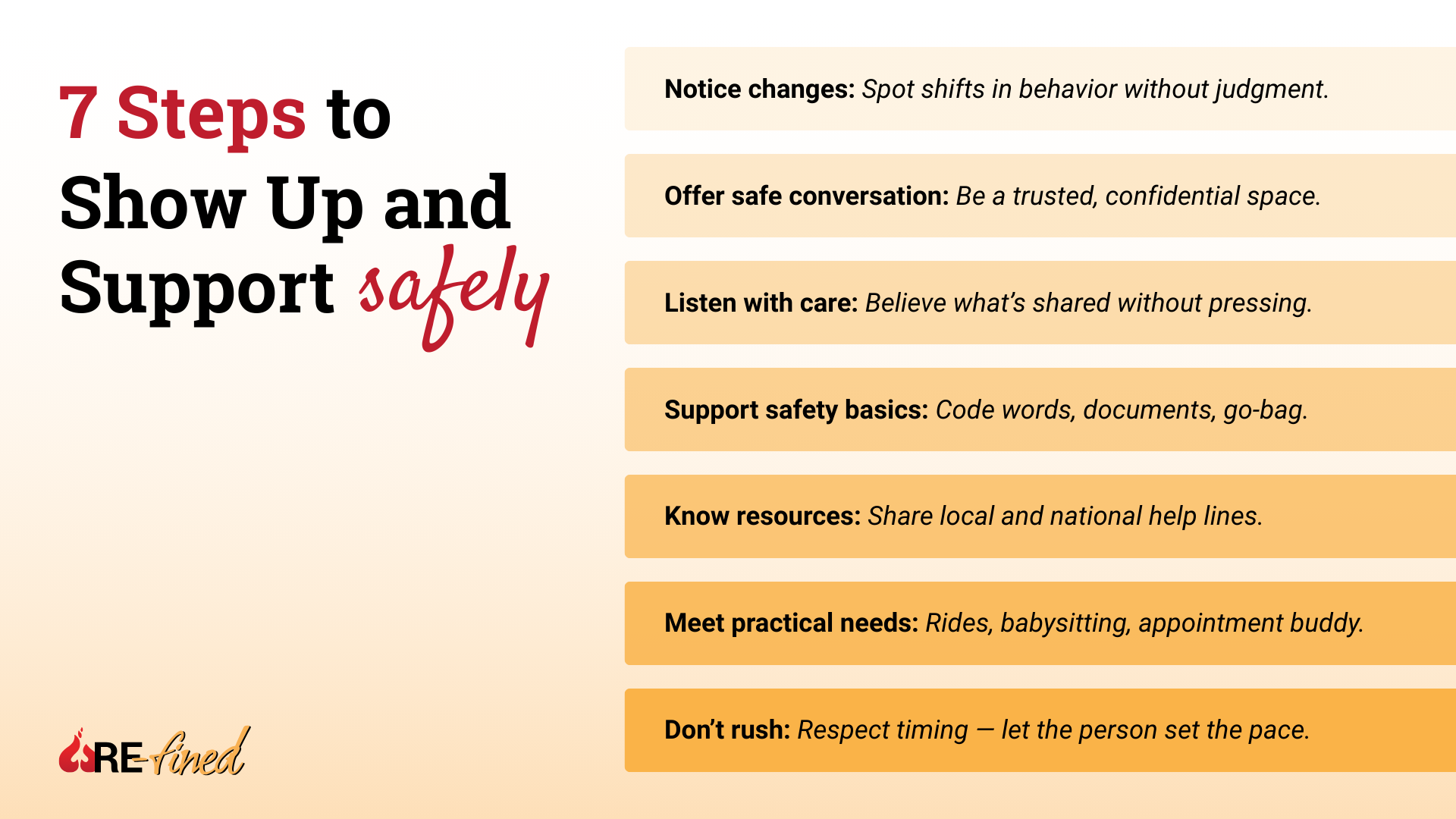
- Become a safe presence: Notice, listen, believe, and support at their pace.
- Invite Re-Fined: Ask us about hosting a Mission Briefing or providing training on trauma-informed, presence-based support.
- Partner with us: Your financial support helps us equip more teams and keep care accessible.
FAQs
What is Domestic Violence Awareness Month?
Domestic Violence Awareness Month is in October and raises awareness about abuse that may not always be visible. It helps communities recognize signs of control, intimidation, and isolation while encouraging safe support for those living through the abuse.
How can I support someone during Domestic Violence Awareness Month?
Notice changes without judgment. You can provide support by:
- Noticing behaviour changes without judgment
- Offering safe conversations
- Listening with care
- Helping with simple safety steps, like code words or storing documents
Help with simple safety steps — code words, safe contacts, copies of documents, a go-bag. Avoid confronting the person causing harm. And, if there is an immediate danger, call 911.
Where can people find help during Domestic Violence Awareness Month in Colorado?
Start with Violence Free Colorado, SafeHouse Denver, and the Rose Andom Center, or contact local law enforcement/emergency services for urgent risk.
